Decoding Offer Chains: The Sequence of Incentives That Build Player Loyalty in Britain's Digital Gaming Scene
Felix Becker · Oct 21, 2026
Decoding Offer Chains: The Sequence of Incentives That Build Player Loyalty in Britain's Digital Gaming Scene
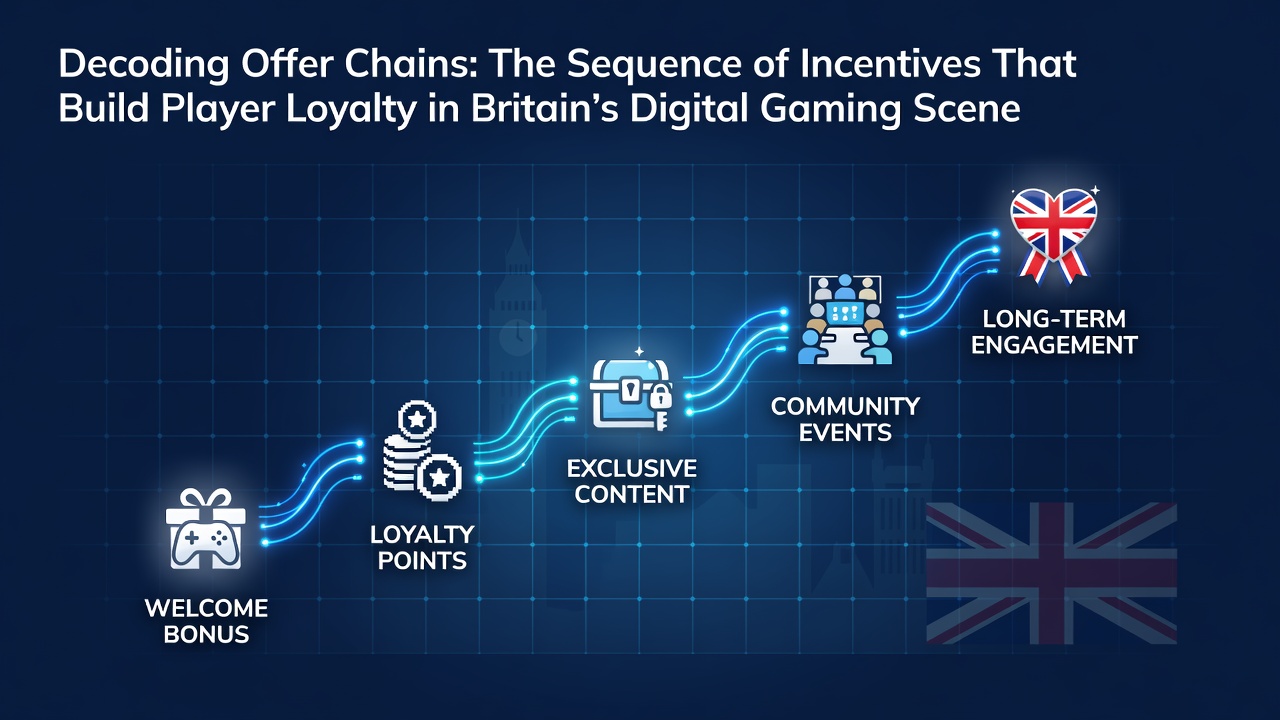
Offer chains operate as deliberate sequences where each incentive connects directly to the next, creating pathways that encourage continued participation across Britain's digital gaming platforms. Researchers at the International Gaming Institute have documented how these structures begin with entry-level rewards and progress through escalating tiers, with data showing retention rates climb when players move from one stage to another without interruption. Platforms design these links so that completing an initial set of activities unlocks access to follow-up opportunities, and this pattern repeats across multiple sessions.
Building the Initial Links in the Sequence
Operators establish the first connection through straightforward entry incentives that require minimal commitment, yet these quickly transition into tasks that demand repeated interaction. Data from industry reports indicate that players who engage with the opening stage show higher likelihoods of advancing because the system automatically presents the subsequent requirement once the prior one finishes. Observers note that this automation removes decision friction, allowing the chain to advance smoothly while participants focus on the activity itself rather than searching for what comes next.
Take one operator who structures daily login requirements to feed directly into weekly progress trackers, and the transition happens automatically once the daily threshold clears. Figures from European gaming analyses reveal that such handoffs increase session frequency by measurable margins because each completed step surfaces the next objective without additional prompts from the player.
Mid-Chain Mechanics and Escalation Points
Once players pass the opening stages, the incentives shift toward layered challenges that combine multiple game types or time-bound objectives, and these elements often appear together within the same interface. Studies from the University of Nevada Gaming Research Center highlight how combining short-term targets with longer accumulation goals keeps momentum alive across weeks rather than single sessions. The sequence incorporates checkpoints where partial progress receives recognition, which prevents drop-off when full completion stretches over several days.

By October 2026 several platforms had refined these escalation points after reviewing participation metrics, introducing hybrid objectives that blend individual performance with community-wide targets. According to figures released by the American Gaming Association, such adjustments produced measurable lifts in cross-session return rates because players saw value in both personal advancement and collective milestones. The chain remains intact because each checkpoint automatically feeds data into the following stage, maintaining continuity without requiring manual intervention.
Terminal Stages and Long-Term Retention Effects
Advanced segments of the chain focus on cumulative achievements that span months, converting earlier activity into status-based privileges that only remain active through ongoing engagement. Reports from the Canadian Centre for Gaming Excellence show that players reaching these terminal stages demonstrate lower churn compared with those who exit earlier in the sequence. The final links often include periodic recalibrations where accumulated progress converts into new starting points, restarting the cycle at a higher baseline.
One platform introduced a rolling conversion system in late 2025 that mapped prior chain completions onto refreshed objectives, and participation data indicated sustained activity through the first quarter of 2026. External analysis from the European Gaming and Betting Association confirmed that these reset mechanisms preserve the motivational thread while preventing stagnation.
Conclusion
Offer chains function through deliberate sequencing that links early incentives to later stages, producing measurable retention outcomes across Britain's digital gaming sector. Industry data consistently show that platforms maintaining clear progression paths experience stronger repeat engagement because each completed step surfaces the next requirement automatically. As of October 2026 operators continue refining these connections based on participation patterns, ensuring the sequence adapts while preserving the core structure that carries players forward.