Mapping Bonus Progressions from Activation to Multi-Game Cycles in British Casino Networks
Felix Becker · Aug 15, 2026
Mapping Bonus Progressions from Activation to Multi-Game Cycles in British Casino Networks
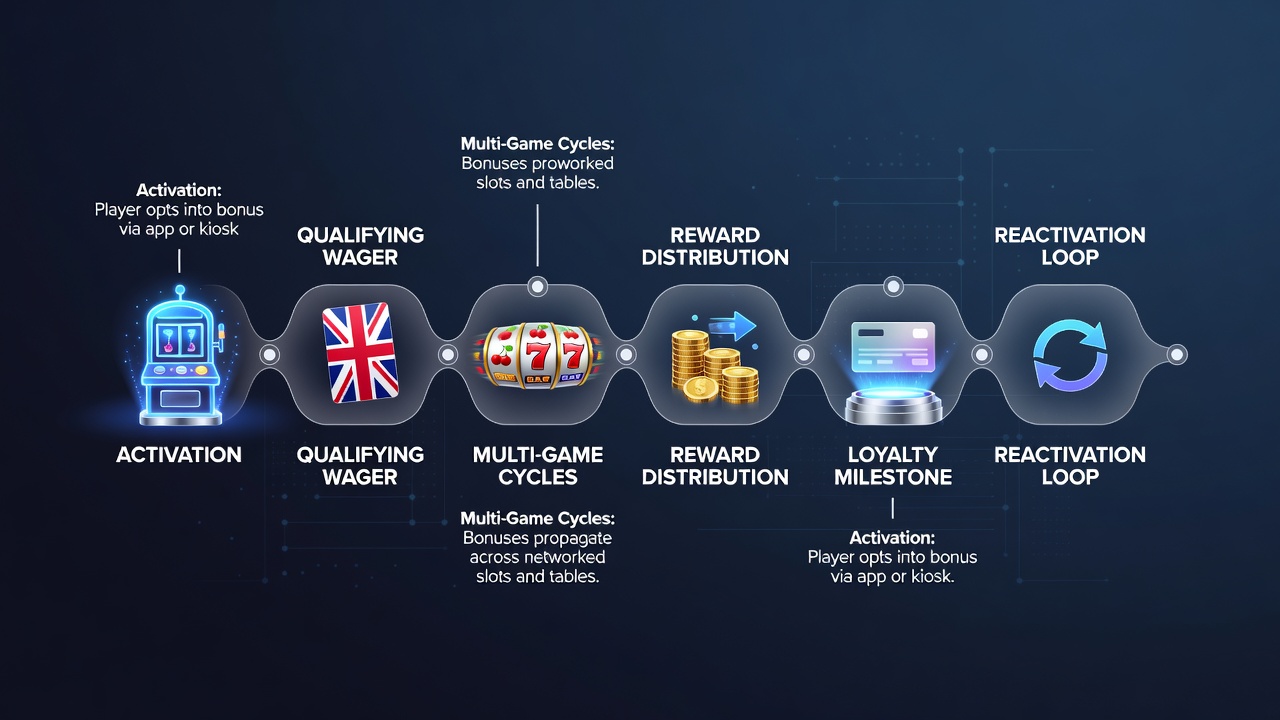
Bonus structures at British casino networks follow distinct patterns that begin at activation and extend across repeated play sessions involving multiple game types, and observers note these sequences create measurable cycles that operators track through player accounts and transaction logs. Activation typically occurs when a player meets initial deposit or registration conditions, after which the bonus amount credits to the account balance or separate bonus wallet while system flags mark the start of any associated wagering requirements.
Initial Activation Mechanics Across Networks
Operators activate bonuses through automated triggers tied to deposit methods or promotional codes, and data from multiple networks shows these triggers align with specific time windows such as weekends or seasonal events. Once active the bonus enters a monitoring phase where gameplay meters record contributions from eligible titles while ineligible games like certain live dealer variants remain excluded. Researchers at institutions including the University of Nevada Reno have documented how activation timestamps correlate with subsequent retention metrics across comparable European markets.
Progression Through Single-Game Usage Periods
During the first cycle players often direct bonus funds toward high-volatility slots that accelerate wager accumulation, yet network rules frequently impose maximum bet limits per spin to prevent rapid depletion. Transaction records indicate that a substantial portion of activated bonuses reach partial completion within the first 48 hours, after which remaining balances carry forward if the player switches titles. This handoff marks the entry into multi-game cycles where contributions from table games or video poker begin to count at reduced percentages compared with slots.
Transition Into Multi-Game Cycles and Network-Wide Tracking
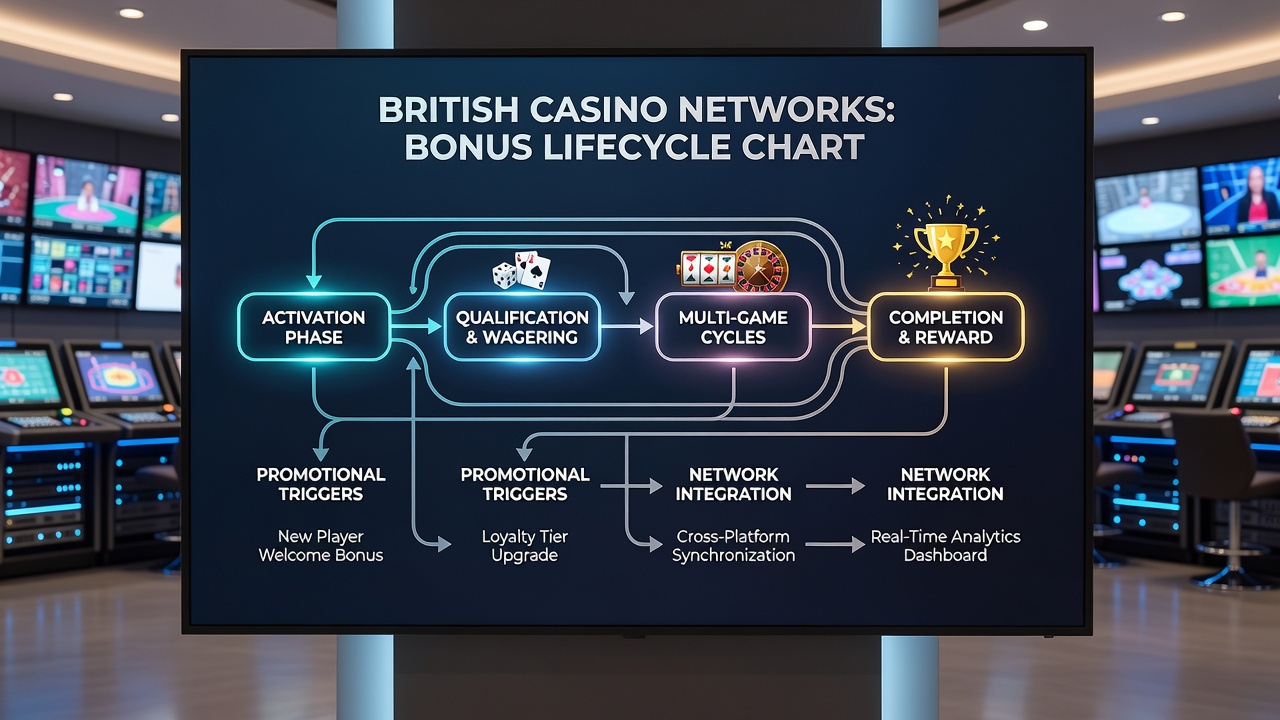
Multi-game cycles emerge when players migrate from slots into roulette or blackjack while the same bonus balance remains active, and operators apply game-specific weighting factors that slow or accelerate requirement fulfillment. Network software logs these shifts in real time, allowing analysts to map how bonus funds fragment across categories over days or weeks. Figures released by the Australian Institute of Family Studies in partnership with gaming research bodies reveal parallel patterns in other regulated markets where cross-genre play extends average bonus duration by 30 to 40 percent compared with single-title focus.
August 2026 saw several British networks introduce unified tracking dashboards that display remaining wagering progress across all connected sites, and this change reduced instances of bonus expiration due to overlooked game-type restrictions. External reports from the Canadian Centre for Gaming Research note similar dashboard implementations helped clarify lifecycle visibility for players and operators alike.
Data Patterns Observed in Extended Cycles
Longer cycles often involve bonus top-ups or reload offers that reset partial progress, yet each addition creates layered requirement stacks that must clear sequentially. Industry datasets indicate that bonuses surviving beyond three game-type transitions show higher conversion rates into cashable winnings, particularly when players alternate between high-contribution and low-contribution titles strategically. Network operators compile these statistics through aggregated anonymized accounts rather than individual tracking, which maintains compliance with data protection standards.
Factors That Shape Lifecycle Duration
Regulatory caps on stake sizes and maximum winnings from bonus play influence how far a bonus can travel through multiple cycles, while network-specific loyalty tiers sometimes grant extensions or reduced wagering thresholds. Seasonal adjustments, such as those observed in late summer periods, further alter contribution rates on certain titles and prompt players to adjust their rotation patterns accordingly. Observers note that these adjustments appear in operator announcements weeks ahead of implementation, giving accounts time to plan remaining bonus usage.
Conclusion
The lifecycle of a bonus at British casino networks therefore spans activation, initial single-game deployment, and subsequent multi-game transitions that operators monitor through integrated systems. Available data from regulatory and academic sources outside the UK demonstrates consistent structural similarities across jurisdictions, and continued refinement of tracking tools supports clearer visibility into how these cycles unfold for both players and network administrators.